

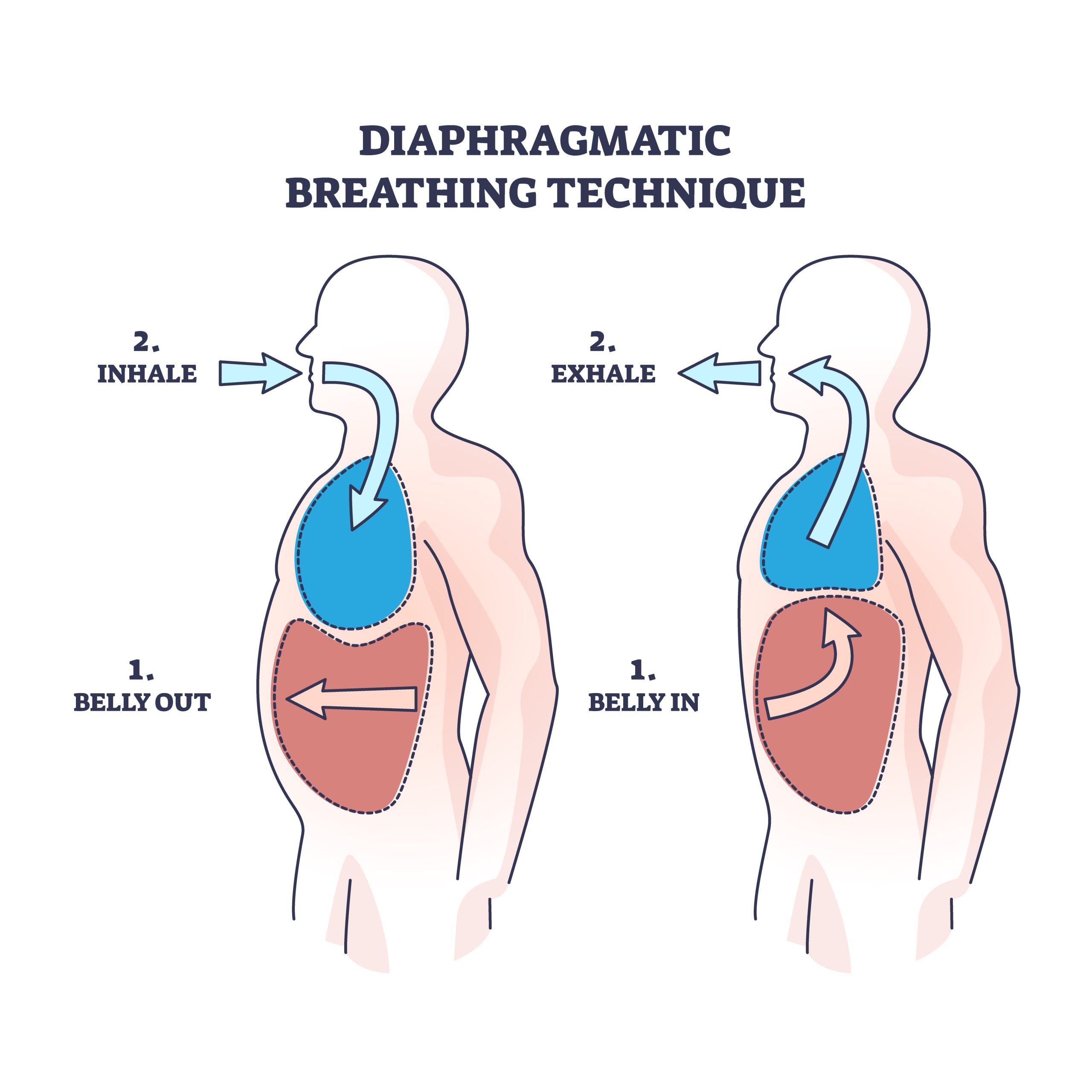
Respiration as an Integrated System
Why These Functions Must Be Understood Together
Having examined the four core functions individually, the next step is to understand respiration as a single integrated physiological system.
In the living body, gas exchange, acid–base regulation, pressure changes and neural communication do not occur in isolation. They operate simultaneously, constantly influencing one another through a network of feedback mechanisms. The significance of respiration therefore lies not only in what each component does, but in how effectively the components work together.
This distinction is fundamental.
A person may move a large volume of air without achieving efficient gas exchange. The lungs may receive adequate ventilation while blood flow is poorly matched to the ventilated regions. Breathing may appear deep and powerful while excessive ventilation lowers carbon dioxide unnecessarily. Conversely, a quieter and slower breathing pattern may provide entirely adequate gas exchange while placing considerably less mechanical demand on the body.
Respiratory function must therefore be considered in terms of coordination rather than quantity.
From Individual Functions to Systemic Coordination
The respiratory system operates through several linked stages:
Ventilation → alveolar gas exchange → pulmonary circulation → blood transport → tissue exchange → cellular metabolism → carbon dioxide production → respiratory feedback.
Each stage affects the demands placed upon the next.
For example, when cellular metabolism increases during physical activity, tissues consume more oxygen and produce more carbon dioxide. Chemical and neural sensing mechanisms detect the resulting changes, respiratory centres alter the breathing pattern, respiratory muscles increase their activity, ventilation rises and pulmonary gas exchange adapts to the new metabolic demand.
This is an example of physiological feedback.
The system is continuously receiving information, comparing that information with the body’s requirements and adjusting respiratory activity accordingly.
Breathing is therefore not simply a motor action. It is part of a dynamic regulatory loop connecting metabolism, circulation, chemistry, mechanics and the nervous system.
Respiratory Efficiency
This leads to an important concept: respiratory efficiency.
Efficient breathing does not necessarily mean taking the largest possible breath. Nor does it mean maximising oxygen intake at all times.
Efficiency means achieving the required physiological outcome with an appropriate level of respiratory work.
This includes effective alveolar ventilation, appropriate carbon dioxide regulation, efficient oxygen transfer, suitable blood flow through the pulmonary circulation and economical recruitment of the respiratory muscles.
The body is constantly balancing these demands.
Too little ventilation may compromise carbon dioxide removal and oxygenation. Excessive ventilation can unnecessarily increase respiratory muscle work and disturb carbon dioxide balance. Inefficient movement patterns can recruit accessory muscles when they are not required, increasing mechanical effort without necessarily improving gas exchange.
The most effective respiratory pattern is therefore context dependent. The breathing requirements of a resting body are fundamentally different from those of a body running, speaking, recovering from exertion or responding to psychological stress.
Ventilation–Perfusion Matching
One of the clearest demonstrations of respiratory integration is ventilation–perfusion matching, commonly expressed as the V/Q relationship.
Ventilation describes the movement of air into the alveoli, while perfusion describes the movement of blood through the pulmonary capillaries.
For efficient gas exchange, these two processes must be appropriately matched.
If an area of the lung receives air but relatively little blood, oxygen transfer from that region is limited. Conversely, if blood passes through an area receiving insufficient ventilation, that blood cannot be adequately oxygenated.
The lungs therefore do not function simply as two large air-filled organs. They are highly organised interfaces in which airflow and blood flow must continually coordinate.
This principle reinforces an important lesson: increasing ventilation alone does not automatically produce proportionally greater physiological benefit.
Respiration and Autonomic Integration
Respiration is also unusual because it sits between conscious behaviour and automatic physiological regulation.
The autonomic nervous system continually adjusts breathing according to metabolic demand, emotional state, posture, activity and changes within the internal environment. Yet unlike many autonomic functions, breathing can also be consciously modified.
- This creates a unique physiological doorway.
- Attention can influence breathing.
- Breathing can influence autonomic activity.
- Autonomic activity can alter cardiovascular and emotional state.
- Those changes can then influence breathing again.
- A feedback loop is created between breath, brain and body.
This is one reason controlled breathing practices can have effects extending beyond the respiratory system itself. The practitioner is not merely changing airflow; they are interacting with a physiological system that is already connected to cardiovascular regulation, sensory processing, movement and autonomic control.
Why the Internal Arts Train the Whole System
This integrated perspective provides an important foundation for understanding Tai Chi and Chi Kung.
Traditional practice does not normally isolate respiration from movement. Instead, breathing is coordinated with posture, alignment, movement, rhythm, relaxation, attention and intention.
The practitioner learns to reduce unnecessary muscular effort, organise the body around the breath and allow respiration to become increasingly coordinated with movement and awareness.
From a modern physiological perspective, this can be understood as training inter-system coordination rather than simply increasing oxygen intake.
- The objective is not to force larger breaths.
- It is not to continually breathe more deeply.
- It is not to maximise oxygen at every opportunity.
Instead, the emphasis is on developing an appropriate relationship between respiratory mechanics, metabolic demand, autonomic state and conscious control.
This provides a useful bridge between traditional internal cultivation and contemporary physiology.
The Respiratory System as a Whole-Body Network
Respiration ultimately cannot be confined to the lungs.
It involves the respiratory muscles and skeleton, the cardiovascular system, blood chemistry, the brainstem and higher brain centres, the autonomic nervous system and the metabolic activity of every living cell.
- A change in one part of the system can therefore produce consequences elsewhere.
- Alter the breathing pattern and carbon dioxide changes.
- Change carbon dioxide and blood chemistry changes.
- Alter blood chemistry and neural regulation responds.
- Change neural regulation and cardiovascular and muscular activity can change.
- Change posture or movement and respiratory mechanics can change.
- Increase metabolic demand and the respiratory system must adapt.
This is the essence of respiratory integration: the ability of multiple physiological systems to operate as one coordinated network.
Key Principle
The quality of respiration is determined not by any single component, but by the coordination of the entire system.
Understanding the four core functions gives us the individual pieces. Understanding their integration allows us to see the complete picture.
The following lessons will therefore move from the respiratory system as a whole into its individual anatomical structures, beginning with the mechanics of breathing and the central role of the diaphragm.